Five terminals. Seventeen thousand acres. One tolled International Parkway running the full spine of the airport from south to north.
Dallas Fort Worth International Airport is a genuine piece of infrastructure — and a real logistical puzzle for any group trying to arrive or depart together. When a 35-person corporate group splits across Terminal A and Terminal E, or when 40 people flying in on four different international carriers need to consolidate at one lower-level curbside after customs, the coordination math falls apart fast if you're relying on separate rideshares and a group text thread. An Arlington charter bus rental turns that five-terminal puzzle into one vehicle, one group leader, and one call to the curb when everyone is assembled.
Below is everything a group planner needs to know about how a bus actually works at DFW — terminal by terminal, curbside by curbside.
Why a Charter Bus Rental Changes the DFW Group Airport Equation
DFW's layout creates a coordination problem most groups underestimate until they're standing at baggage claim with half the group still upstairs. The airport covers more acreage than Manhattan, and Terminal A's lower-level curbside and Terminal E's lower-level curbside are not close — they're separated by a gap that requires the Terminal Link bus or Skylink airside train to bridge, both of which add 10-15 minutes to any consolidation attempt. Coordinating multiple rideshares across two terminals means multiple ETAs, multiple vehicles circling the loop, and the same lower-level congestion every vehicle has to navigate.
A charter bus or minibus booked through a large network of bus companies serving Arlington removes that math entirely: everyone stages at one agreed lower-level curbside, one group leader makes one call, and the bus moves to the curb when the full headcount is ready.
The other advantage is the luggage load. A group of 30 people returning from a week-long conference brings checked bags, laptop cases, and presentation equipment that will not fit comfortably in three rideshares. A 40-56 passenger charter bus carries all of it in the undercarriage bays without a separate cargo vehicle.
Compare vehicle options and get pricing in under 30 seconds through the Arlington airport transportation page, or call 434-338-7957 any time.
DFW Airport Terminal Guide: Which Airlines Land Where
Before you can plan a group bus pickup at DFW, you need to know which terminal each subgroup is landing in — because American Airlines passengers may land in Terminal A, B, or C, while Delta and United passengers land in Terminal E, and all international carriers land in Terminal D. Getting that confirmed before departure day is what separates a clean pickup from a 45-minute staging scramble on International Parkway.
| Terminal | Primary Airlines | Gates | Notes for Group Bus Pickups |
|---|---|---|---|
| Terminal A | American Airlines (domestic) | 36 | DART Orange Line rail station on lower level; walkway connections to Terminals B and C landside |
| Terminal B | American Airlines, Spirit, Frontier | 45 | Highest gate count — baggage claim can run long on busy afternoons; build 30+ minutes from wheels-down to curbside |
| Terminal C | American Airlines (domestic) | 38 | Recently completed a $3 billion reconstruction that added 9 gates; adjacent parking garage work is still underway, so lower-level curbside congestion can run higher than normal — check construction advisories |
| Terminal D | International carriers + American long-haul | 33 | International hub; lower level IS baggage claim level; customs exits here directly; cleanest commercial vehicle approach at DFW |
| Terminal E | Delta, United, JetBlue, Alaska, Air Canada, Frontier | 41 | No direct walkway to A–D; Terminal Link or Skylink (airside) required; add 10–15 min to consolidation time |
Terminal D deserves a specific note for groups with international arrivals. All international passengers at DFW clear Customs and Border Protection inside Terminal D, and they exit directly onto the lower level — which at Terminal D is also the baggage claim level, unlike the other terminals where the lower level sits one floor below the bags. International arrivals exit customs and walk straight to the lower-level curbside, which is also why Terminal D runs the smoothest commercial vehicle approach of any terminal at DFW.
Groups meeting international arrivals should make Terminal D the default pickup point rather than routing the whole group through a different terminal.
Charter Bus & Party Bus Drop-Off at DFW Airport
Departing groups board at the upper-level curbside of their terminal — the departures floor, the same road where everyone checks luggage and prints boarding passes. Every terminal's upper-level curbside at DFW is designated for active loading and unloading only; no vehicle can sit idle at the curb. The bus pulls up, the group unloads with bags, and the bus exits.
If your group is checking oversized gear — equipment cases, strollers, sports bags — a full-size charter bus's deep undercarriage bays handle the load without the scramble of fitting everything into three separate trunks.
From Arlington, the approach for departing groups follows SH-360 North to SH-183 East (Airport Freeway) into DFW's South Entrance on International Parkway. That puts the bus at Terminal D first, working north through C, B, A, and E. Groups departing from Terminal A or E continue past D and C on International Parkway to the correct upper-level loop. DFW's wide-lane commercial vehicle approach at each plaza toll — marked with yellow signs — accommodates full-size charter buses and minibuses without pulling into standard vehicle lanes, per the airport's published ground transportation guidance.
For morning departures from Arlington's corporate and entertainment corridor — the AT&T Stadium area, downtown Arlington near Collins Street — budget at least 45 minutes of travel time during weekday rush hour (7-9 AM). The SH-360 / I-30 interchange near Six Flags backs up consistently during morning peak, and the Airport Freeway (SH-183) adds time when traffic is stacking from the Irving merge. On a bus, that stretch is someone else's calculation; your group is already loaded and together.
Charter Bus & Party Bus Pickup at DFW Airport (Arrivals)
Arriving groups board from the lower-level curbside at each terminal — look for the red "Charter Bus" columns marking the designated commercial vehicle zone, separate from rideshare staging and taxi lines. At Terminals A, B, C, and E, the lower level is one floor below the baggage claim area — follow "Ground Transportation" signs from the carousel hall to the exterior doors. At Terminal D, the lower level and baggage claim are on the same floor: international arrivals clear customs and walk directly to the lower-level curbside without going up or down.
The non-negotiable rule for every DFW group bus pickup: the coordinator gets the call only when every single person in the group has their luggage and is standing at the lower-level curbside. DFW's airport traffic regulations prohibit any commercial vehicle from waiting at the curb — the bus stages in a holding area off the terminal loop and moves to the curbside only when the group is ready. If the bus arrives to an incomplete group, airport regulations require it to circle the terminal loop again.
That circle adds approximately 20 minutes to your pickup. One premature call when three people are still at the carousel costs the whole group that time — which matters when you're running a tight connection to a hotel block in Arlington or a corporate event starting at a fixed hour.
Gather first, call second — no exceptions. One group leader per terminal. That person makes the coordinator call when the complete headcount is assembled at the lower-level exterior doors with all luggage collected.
Not when the last bag is spotted on the belt. When everyone is through the doors and standing at the curb. One call too early at DFW adds a full terminal loop — about 20 minutes — to your pickup window.
Terminal-by-Terminal Meeting Points for Charter Bus Pickups at DFW
Terminal A: Lower level, curbside — one floor below the departures and baggage claim level. If part of your group connected to DFW from downtown Dallas or Plano on the DART Orange Line rail, they arrive directly at Terminal A's lower level, which is a useful consolidation advantage. Walk-out time from carousel to the lower-level exterior doors is typically 4-6 minutes once bags start moving on a normal domestic flight.
Terminal B: Lower level, curbside. Terminal B has DFW's highest gate count (45 gates), which means baggage claim runs longer than a smaller terminal when multiple arriving flights hit simultaneously. Build in 30 minutes minimum from wheels-down to lower-level staging — closer to 40 minutes during busy afternoon banks when several flights clear carousels at once.
Terminal C: Lower level, curbside — with an active caveat. Terminal C's $3 billion reconstruction project recently added 9 new gates, and the adjacent parking garage work is ongoing — the lower-level curbside approach can run more congested than normal with shifted signage while that continues. For large groups of 40 or more at Terminal C, coordinate with the bus network in advance to assess whether staging a pickup at Terminal D's lower level — accessible landside via Terminal Link bus — would run smoother on your specific date.
Check the DFW construction page for current advisories the week before you travel.
Terminal D: Lower level, which at this terminal is the baggage claim floor itself. This is the cleanest commercial vehicle pickup zone at DFW — more staging room, better signage, and direct access from the customs hall for international arrivals. If your group has any flexibility in choosing a consolidation point, Terminal D is the default recommendation.
Groups coming from Terminal E or A via Terminal Link can meet a Terminal D group here without anyone needing to navigate an extra level or construction zone.
Terminal E: Lower level, curbside — but Terminal E sits at the north end of the airport, separated from Terminals A through D by a gap that requires Terminal Link or Skylink (airside only) to bridge. If your group splits between Terminal E and an American terminal, the Terminal E subgroup needs its own group leader making a separate, independent call to the coordinator — timed from when the Terminal E subgroup specifically is assembled at the curbside. Add 10-15 minutes to any consolidation estimate for a pickup that bridges Terminal E and any other terminal.
The Skylink and Terminal Link: Moving Between DFW Terminals
Two systems connect DFW's five terminals, and knowing which one your group can use after landing prevents a lot of confusion at the worst possible moment.
The Skylink runs 24 hours a day, every two minutes, connecting all five terminals in a maximum of nine minutes between the farthest stations. It's free, it's fast, and it runs constantly — with two stations per terminal and a fully automated, climate-controlled ride. The key limitation for arriving groups: Skylink operates entirely within the post-security, airside zone.
You must be through TSA screening to board it. For passengers with a connecting flight who need to move between gates, Skylink is the fastest option at DFW. For a group that has already landed, collected bags, and needs to reach the lower-level curbside, Skylink is not the path — you cannot use an airside train to exit the secure zone landside.
The Terminal Link is the landside alternative: free orange buses running every 10 minutes between 5 AM and midnight on the pre-security road connecting all terminals. Terminal Link doesn't require a security screening to board. If your Terminal E subgroup needs to join the rest of the group at Terminal D's lower level for a consolidated bus pickup, Terminal Link covers that leg in roughly 10-15 minutes.
Factor that segment into your "gather first, call second" calculation — the coordinator call goes out after the Terminal Link group has arrived at the consolidation terminal and everyone is assembled at the curbside.
Rent a Bus from Arlington to DFW Airport: Routes, Drive Times, and Traffic
From virtually any Arlington starting point, the route to DFW is the same: SH-360 North to SH-183 East (Airport Freeway), which enters DFW's South Entrance directly onto International Parkway. The official DFW directions page notes that the airport is reachable from SH-183 on the south, so groups coming from Arlington, Fort Worth, and Grand Prairie can enter directly at the South Entrance without circling to the north side of the airport. Coming from the Globe Life Field and AT&T Stadium corridor in central Arlington, SH-360 is accessible from I-30 without touching any of the more congested DFW approach roads from the north.
One important note about the South Entrance approach: International Parkway puts you at Terminal D first, then north through C, B, A, and E — so if your group's airline is at Terminal E (Delta, United, JetBlue), the bus drives past all four other terminals before reaching the correct curbside. That's a useful sequencing detail to confirm with the coordinator when you book.
| From Arlington | Approx. Distance | Off-Peak Drive Time | Rush Hour (7–9 AM / 4–7 PM) |
|---|---|---|---|
| Downtown Arlington / AT&T Stadium area | ~19 miles | 20–25 minutes | 45–60 minutes |
| East Arlington / Kennedale area | ~24 miles | 25–30 minutes | 50–65 minutes |
| Grand Prairie (adjacent) | ~22 miles | 22–28 minutes | 45–60 minutes |
| Mansfield (south of Arlington) | ~29 miles | 30–35 minutes | 55–70 minutes |
| Fort Worth (downtown) | ~30 miles | 30–35 minutes | 55–75 minutes |
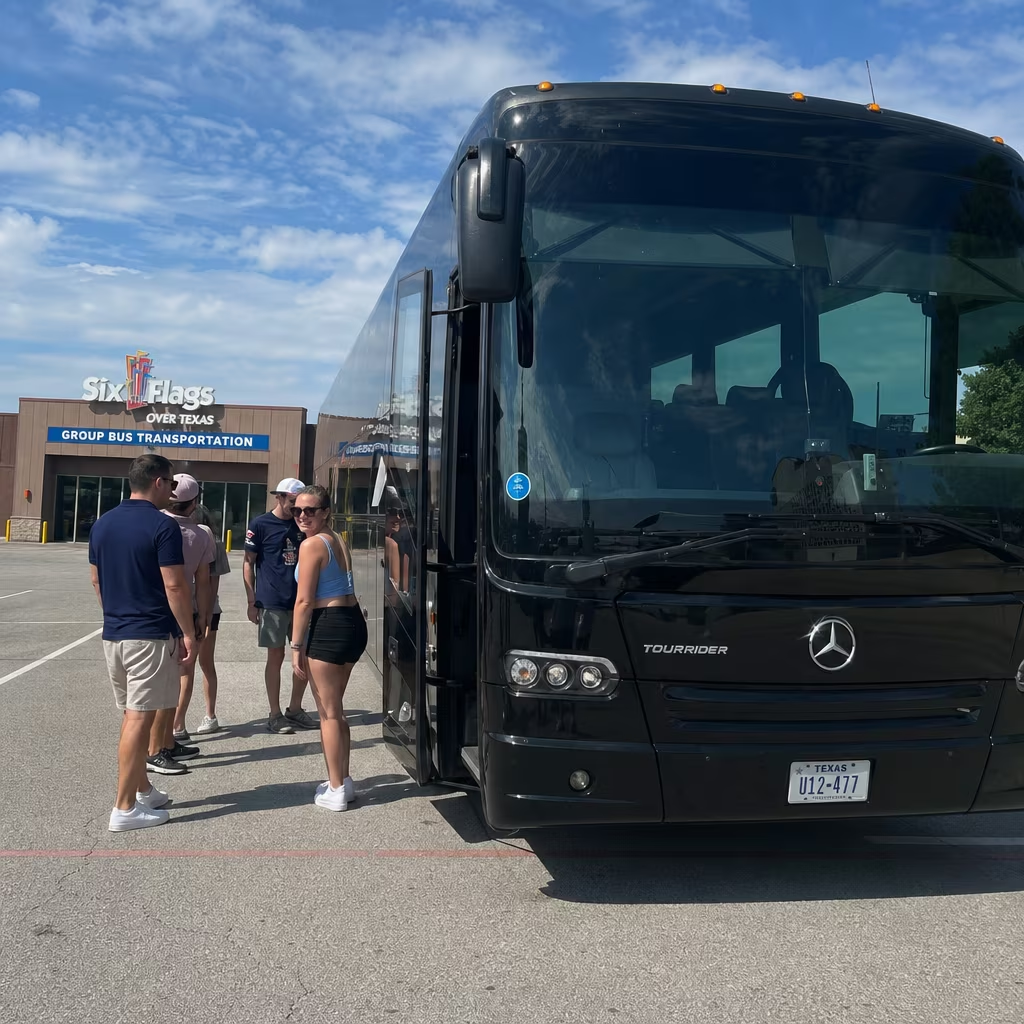
The consistent congestion point on this route is the SH-360 / I-30 interchange near Six Flags Over Texas — a known backup during weekday peak hours, particularly westbound in the afternoon. For morning departures from Arlington headed to DFW, the trip from pickup to upper-level curbside drop-off needs to account for that interchange specifically. SH-183 itself moves well once you're past the Midway Road stretch in Irving; the slowdown is almost always on the Arlington-side approach, not on the Airport Freeway itself.
A charter bus rolling on time is also rolling together — no one is texting from a stuck car two exits back.
One detail about the road into DFW: International Parkway itself is a tolled road, and every vehicle entering the airport through either plaza pays that toll. The 2024 pass-through rate was set at $9 per vehicle — so a group arriving in 10 separate cars pays $90 in tolls before parking. For a charter bus, that toll is typically handled by the transportation provider as part of the trip rather than billed separately at the curb — worth confirming with the network when you book.
The airport's commercial vehicle lane approach — wide lanes marked with yellow signs at each plaza entrance — is designed specifically to accommodate charter buses and minibuses without pulling into standard vehicle lanes.
Parking at DFW Airport: What It Actually Costs for a Group
DFW parking costs shift fast once your group exceeds a few cars. Terminal garage parking currently runs up to $32 for a 6-to-24-hour stay per vehicle, per the official DFW terminal parking page. Express lot parking runs $18 for a 6-to-24-hour stay with a free shuttle running day and night.
The furthest Remote lots run $14 for a 6-to-24-hour stay with a free shuttle to the terminal — but that shuttle is another step, another wait, and another moment for the group to fragment into different shuttle cars heading to different terminals.
| Option | Cost shape | Arrive together? | Lower-level curbside access | Luggage handling | Best group size |
|---|---|---|---|---|---|
| Private charter bus | One flat rate, split by group | Yes — one vehicle, one curbside | Best — direct to any terminal's lower level | Undercarriage bays for full checked luggage | 15–56 |
| Rideshare (Uber/Lyft) | Per car each way; surge on arrivals | No — multiple cars, multiple ETAs | Same lower-level zone as charter bus | One car's worth of bags per vehicle | 1–4 per car |
| Everyone drives and parks | $14–$32 per car per day + gas | No — caravans split up | Terminal garage or Remote shuttle required | Each car handles its own bags | 1–2 cars |
| DART Orange Line rail | Per-person fare, one-way | Only if on the same train | Terminal A lower level only | Whatever fits in your hands | Any, but Terminal A arrival only |
For a departing group of 30 in 10 separate cars: $140-$320 in daily parking — before gas, before the Remote lot shuttle wait, before the 10 separate groups that need to find each other at check-in on the departures level. One Arlington charter bus rental covers the same 30 passengers for one flat arrangement that splits across the group. For a one-day airport run — morning drop-off, afternoon pickup — a 15-35 passenger minibus or full-size charter bus outpaces the per-car parking total once you're past about six vehicles' worth of passengers.
What Size Bus Does Your Group Need for a DFW Airport Transfer?
Airport runs carry a wrinkle other group trips don't: luggage load. A group of 25 people heading to a game travels light. The same 25 people returning from a week-long conference bring checked bags, laptop cases, and gear.
The right vehicle at DFW accounts for the luggage, not just the headcount. Browse the full vehicle lineup for configurations and capacities; here's how the options break down for a DFW group transfer from Arlington.
A Sprinter van or 14-passenger Sprinter limo handles small executive groups — 10 to 14 passengers — cleanly. Both fit any terminal's commercial vehicle lane without difficulty and carry modest cargo, making them ideal for business travelers with carry-ons or a single checked bag each, not groups hauling presentation equipment or sports gear.
A 15-35 passenger minibus covers mid-size groups and offers overhead storage along with underfloor capacity. It's the most maneuverable vehicle at DFW's terminal approach roads and the most cost-efficient per seat for groups in that range — at $200-$250 per hour on weekdays, it clears the per-car parking math quickly once you're past about eight passengers.
A 40-56 passenger charter bus is the answer for large groups or anyone moving significant checked luggage. Deep undercarriage bays handle full-size suitcases, oversized bags, and sports equipment that would require a cargo vehicle in any other configuration. Onboard restrooms on select vehicles make the staging wait at DFW's lower-level curbside more comfortable, particularly for groups with a long drive back toward Fort Worth or Mansfield after a flight lands late.
For groups splitting across two different terminals — say, 20 people at Terminal D and 20 at Terminal E — two buses coordinating simultaneous pickups and merging at a central Arlington hotel is a clean solution that one rideshare carousel-scramble cannot replicate.
DFW Airport Party Bus and Charter Bus Rental Prices from Arlington
Pricing for a DFW airport run depends on vehicle size, total hours on the road, and the day of the week. To give you an idea, a 15-35 passenger minibus typically runs $200-$250 per hour on weekdays and $200-$275 per hour on weekends. A 40-56 passenger charter bus runs $200-$350 per hour on both weekday and weekend dates.
Most Arlington-to-DFW runs cover 2-4 hours of vehicle time, depending on whether the trip is a one-way drop-off, a round-trip, or a multi-flight pickup with a staging window. Split those costs across 20, 30, or 50 passengers and the per-person number drops well below what separate rideshares would cost — without the coordination overhead and without the luggage problem.
These are planning ranges; the actual quote for your trip moves with vehicle type, exact date, and route length. Partybusarlington.net makes it easy to compare options and get pricing in under 30 seconds — fill out the quick online form or call 434-338-7957 any time, any day, with no account required and no obligation. See the Arlington party bus prices page for a broader look at rate ranges across vehicle types.
Tips for a Smooth Group DFW Airport Transfer
Map your terminals before departure day. If your group is flying in on more than one airline — American on Terminal B, Delta on Terminal E — assign a subgroup leader for each terminal and pick a single consolidation point in advance. Terminal D's lower level is the recommended default: most staging room, clearest commercial vehicle signage, and direct access from customs for any international arrivals.
Everyone converges there via Terminal Link from whichever terminal they landed in.
Build in real baggage claim time. Terminal B's 45 gates mean multiple flights clearing carousels simultaneously on busy afternoons. Terminal D's customs processing for international arrivals adds 15-30 minutes beyond a domestic flight's typical carousel wait.
A minimum of 30 minutes from wheels-down to lower-level curbside is realistic for any DFW terminal; 40-45 minutes is safer for Terminal D international arrivals or large domestic groups landing at Terminal B during an afternoon bank.
Check Terminal C's lower level before you travel. The recently completed $3 billion renovation added 9 new gates, and adjacent parking garage work is still ongoing — congestion on Terminal C's lower-level curbside can run higher than normal with signage that has shifted during different project phases. Review the DFW Terminal C construction page the week before your trip for any current advisories affecting your curbside approach date.
Cell phone lots are for personal vehicles only. DFW operates a North Cell Phone Lot (53 spaces, near the North toll plaza) and a South Cell Phone Lot (approximately 60 spaces, near Rental Car Drive and Southgate Avenue), both free for up to two hours. Per the official DFW cell phone lot page, commercial vehicles are not permitted in either lot.
The bus stages off-terminal using commercial vehicle protocols until the group is ready at the curbside — which is exactly why the "gather first, call second" protocol matters more at DFW than at a smaller airport.
Set one coordination channel, one group leader per terminal. The fastest DFW pickups have one designated leader per terminal making one call when the full subgroup is assembled — not a group text thread where five people are reporting their bag status at the same time. Decide who makes the call before the plane lands, confirm the consolidation point, and the rest of the transfer runs on schedule.
Frequently Asked Questions: DFW Airport Bus Rentals from Arlington
Where exactly does a charter bus pick up at DFW Airport?
Charter buses pick up from the lower-level curbside at each terminal — look for the red "Charter Bus" columns marking the designated commercial vehicle zone, separate from rideshare and taxi staging. At Terminals A, B, C, and E, the lower level is one floor below the baggage claim and departures level. At Terminal D, the lower level and baggage claim are on the same floor — international arrivals exit customs directly onto this level.
No charter bus can wait at the curb; the coordinator call goes out only when the complete group is assembled with luggage at the exterior doors.
Which DFW terminal is easiest for a group charter bus pickup?
Terminal D's lower level consistently runs the smoothest commercial vehicle approach of the five terminals — more staging room, better signage, and no construction congestion. It's also the arrival point for all international flights. If your group has any flexibility in choosing a consolidation point, Terminal D is the default.
Groups landing at other terminals can reach Terminal D's lower level via the Terminal Link bus (5 AM-midnight, every 10 minutes, free, landside) without going through security again.
How long does the drive from Arlington to DFW take?
Off-peak, the SH-360 North to SH-183 East route from central Arlington to DFW's South Entrance runs about 20-25 minutes. During weekday rush hours — 7-9 AM or 4-7 PM — budget 45-60 minutes. The SH-360/I-30 interchange near Six Flags Over Texas is the consistent slow point; SH-183 itself typically flows once you're past Irving.
For morning departures from Arlington, a 45-minute window from pickup to upper-level curbside drop-off is the safe planning number.
Which airlines are in which DFW terminal?
Terminals A, B, and C are American Airlines domestic. Terminal D is the international hub — Air France, British Airways, Emirates, Lufthansa, Qantas, Qatar Airways, Japan Airlines, Korean Air, Aeromexico, Avianca, and American's international flights all depart from D. Terminal E handles Delta, United, JetBlue, Alaska Airlines, Air Canada, and Frontier. If your group is flying mixed carriers — some American, some Delta — expect Terminals A/B/C and E and plan a Terminal Link consolidation at Terminal D.
What is the Skylink, and can our group use it after landing?
Skylink is DFW's automated people mover running every two minutes, day and night, connecting all five terminals in under nine minutes. The important limitation: Skylink operates entirely post-security in the airside zone. Arriving passengers who have landed, collected luggage, and need to reach the lower-level curbside cannot use Skylink for that outbound path — you cannot board a secure-zone train to exit landside.
The Terminal Link bus (landside, 5 AM-midnight, every 10 minutes) is the right tool for moving groups between terminals after collecting bags.
Can a charter bus drop off at DFW departures?
Yes — drop-off is at the upper-level curbside (departures level) of whichever terminal your airline uses. All upper-level curbsides at DFW are active loading and unloading zones only; no vehicle can sit idle. The bus pulls up, the group unloads with bags, and the bus exits.
For oversized checked luggage, a charter bus's undercarriage bays handle the load at the curbside without the scramble of multiple car trunks.
Can the bus handle a split-terminal pickup — some passengers at Terminal D, some at Terminal E?
Yes — two buses can coordinate simultaneous pickups at different terminals and meet your group at a central Arlington hotel or venue. For groups where two subgroups are landing at different terminals within 30-45 minutes of each other, the timing gets built into the booking so neither bus is sitting idle and neither subgroup waits unnecessarily at the curbside. Call 434-338-7957 to work through the sequencing when you request a quote.
What happens if our flight is delayed at DFW?
Flight delays at DFW ripple through frequently — the airport is one of the busiest connecting hubs in the world, and weather anywhere in American's network can push a Dallas bank. With a private charter bus, you communicate the updated arrival time and the bus adjusts rather than requiring a cancel-and-rebook cycle with surge-priced rideshares. When requesting a quote, confirm the delay communication process so your group has a clear protocol if landing time shifts significantly.
How far in advance should we book a charter bus for a DFW airport run?
For standard corporate and group transfers, two to four weeks of lead time gives good vehicle selection. For large groups requiring multiple buses, peak travel periods around holidays, or summer 2026 travel during World Cup events at nearby AT&T Stadium, four to six weeks out is safer. Call 434-338-7957 as soon as your date is confirmed — the right vehicle at the right hour goes first.
Book Your DFW Airport Bus Rental from Arlington Today
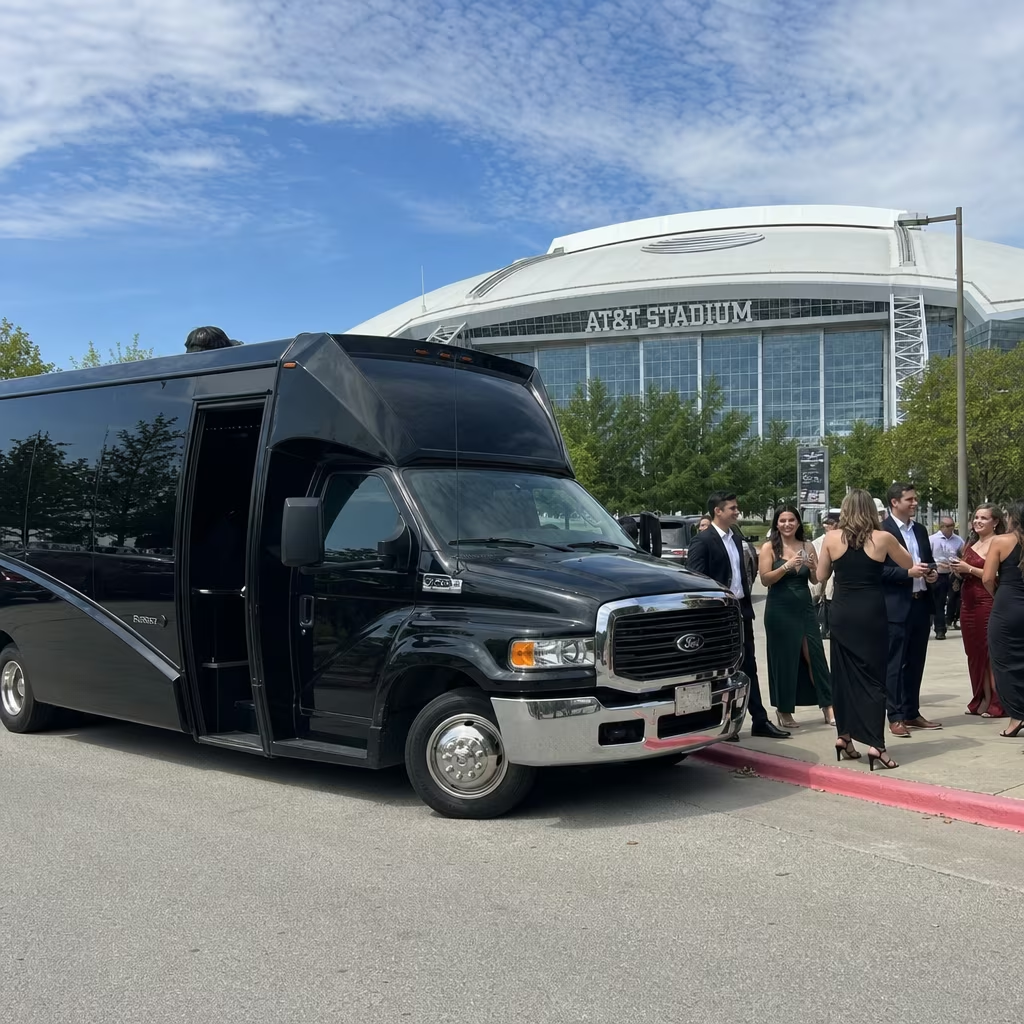
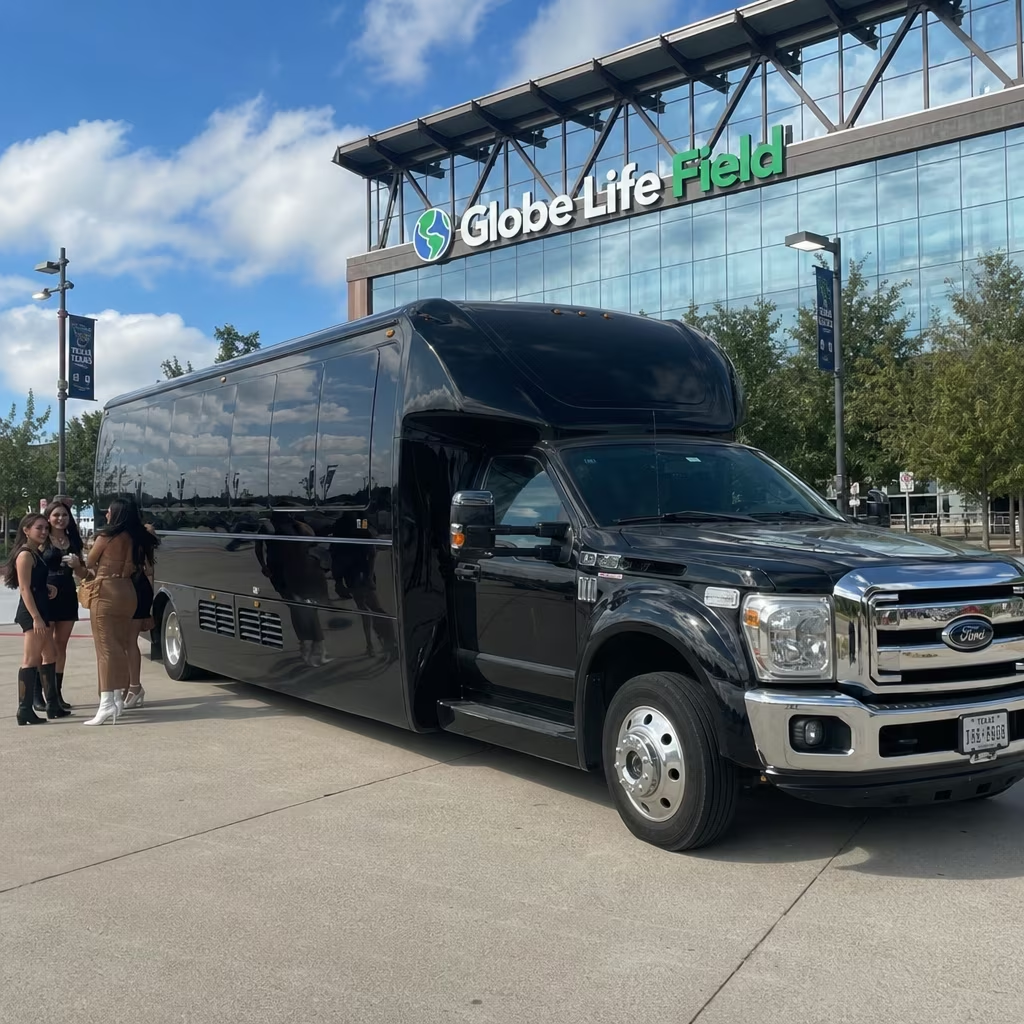
Five terminals, one International Parkway, and a group that needs to land or depart together — that is the DFW coordination problem, and a private Arlington charter bus or party bus rental is the straightforward answer. Partybusarlington.net makes it easy to compare vehicle options and get pricing in under 30 seconds: fill out the quick online form or call 434-338-7957 any time, any day, with no account required and no obligation. Also planning group travel in the area? The AT&T Stadium bus guide and the Globe Life Field transportation guide cover their own drop-off and parking logistics in the same detail.
For the full range of Arlington group transfers and event transportation, the Arlington group transportation services page has every occasion covered.